

The following was originally sent in an Email Newsletter to over 50,000 subscribers on 12/4/25. Subscribe here to join our mailing list for future monthly pitching tips.
–
Thoughts on program hopping & over-tinkering 🤔
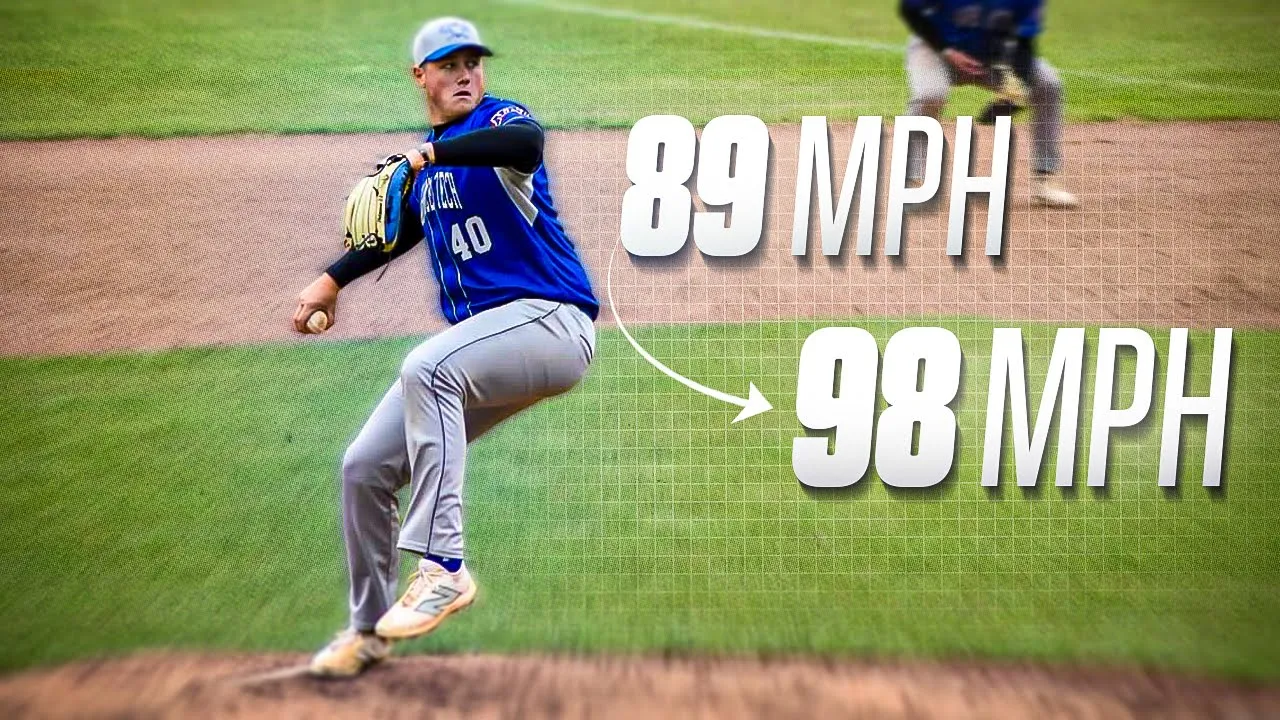
I’ve done a lot of tinkering over the last 20 years (going from 73 mph and 150 lbs to drafted and touching 98+ mph), and I’m all for experimenting to find what works for a certain player.
That being said, there’s a fine line between exploring new training/throwing strategies & being a program hopper.
These athletes lack the patience to see a given approach through for long enough to draw a rational conclusion about its effectiveness.
Put differently, they don’t allow the experiment to reach statistical significance.
- They try a new pitch grip, but they only throw it for a handful of pitches before declaring that it doesn’t work.
- They try a new nutritional approach, but when they stall out on week 3 they determine that their genetics are to blame.
- They bounce from facility to facility or coach to coach, searching for that quick fix that won’t ever come.
It’s not that they don’t work hard – it’s that they aren’t patient.
As I’ve stated before, “long-term athletic development is about learning to balance a sense of urgency with patience. If you’re missing either, you won’t get very far.”
Over time, as a player finds what works for them, these lifting, pitch design, mechanical, and nutritional experiments should happen primarily on the fringes, because there will be a growing pool of tests that have worked.
Put bluntly, athletes must understand not to scrap their entire program every time they see a new drill on IG.
This is easier said than done in the current age of social media (I sound like an old-head saying that).
There is so much info out there that it gives a lot of players “training ADHD.”
These guys can’t stick it out through a program to actually see results.
At the end of the day, Bruce Lee said it best: “Absorb what is useful, discard what is useless, and add what is specifically your own.”
That being said, training needs do gradually evolve over time.
What you should be doing at 15 won’t be the same at 21.
So what is the solution?
Ultimately, it’s education.
If you understand the why behind what you’re doing, it helps mitigate much of this blind searching, and you learn to avoid scrapping the parts of your routine that provide real utility while still keeping an open mind to implementing new ideas when it makes sense.
This is what we preach at Tread.
Our coaches are rigorously vetted, rigorously onboarded through our internal curriculum (Tread U), and intent on providing the why to our athletes – not just a collection of sets, reps, grips, drills, cues and throwing progressions.
That doesn’t scale long-term on its own.
P.P.S. Here’s a completely unrelated meme I posted.
P.P.P.S. I recently hit 95+ mph for the first time in over 8 years, despite my various bodily injuries.
–
Content Highlights:
Quick Links