
Tell me if you’ve heard this story before.
A pitcher is traded to a new team at the deadline and suddenly they are using a new pitch or have adjusted their pitch usage to change the course of their season.
What about this one? A struggling pitcher is sent down to the minors and re-emerges with a new weapon that helps them break out. These are your classic examples of using pitch design and manipulating pitch usage to solve an in-game performance issue. But how do you know when that should be the solution?
There are a variety of ways to use the player development process to influence a player’s on-field performance and pitch design is one of those tools. It is also one of the most popular areas of player development to talk about because of the publicly available data that can quantify it.
That doesn’t mean it is always the answer. This post aims to highlight some of the times when pitch design and arsenal manipulation can be a very effective solution to an in-game performance problem and other instances where you may be best served attacking a different area.
When to use pitch design:
In-Season/Close to the Start of the Season
In a lot of cases, pitch design can be a low-cost player development strategy. Especially when dealing with higher-level throwers, these athletes have the proprioception required to learn, execute and implement new pitch shapes relatively quickly. Additionally, being able to recognize a pitcher’s biases will give you a roadmap to what they can and should throw.
Making mechanical adjustments, improvements to force production and rate of force production or range of motion and tissue quality can be difficult during a season or when a season is quickly approaching. Pitch design and pitch usage adjustments can be more easily executed without utilizing too much of a player’s training economy in a given week.
Think of this as a band-aid. There might be other areas that are lower-hanging fruit for an athlete, but to attack those during the season might be too high a cost.
Not getting enough swing-and-miss because you aren’t throwing hard enough? Add in a bigger breaking ball to try and generate some more whiff. Or drop your fastball usage and start using your changeup more.
Struggling to get ahead in the count? Add a cutter as something with less total movement that is easier to throw in the zone and start deploying it early in at-bats.
Giving up a lot of hard contact against same-sided hitters? Add a sinker and start attacking those hitters in on the hands.
Easier said than done, but for high-level pitchers, this can be a reasonable means for rectifying a performance problem during the season.
I encourage caution when taking this approach because it won’t be this simple for everyone. The truth is that some pitchers are more skilled at manipulating the baseball than others. Adding pitches is going to come at a lower cost for some and a lot of that has to do with the skill level/age of the pitcher.
Additionally, there is always the risk that adding a pitch affects everything else that happens around it. A common example is a pitcher trying to add a sweeper, frequently lowering their arm slot to do so and altering their primary fastball profile. It is crucial to be hyper-aware of the exact addition you are trying to make and monitor the rest of the profile carefully.
Velocity/Command Is Good, Performance Is Bad
In a lot of cases, poor performance can be attributed to one of two things: inadequate velocity or poor command. If those two boxes are checked, then it may be time to turn to your arsenal and start asking some questions. Let’s look at two examples of ways to attack solving this sort of problem.
The first is pitch usage. Predictability takes away some of the advantage that a pitcher has. If you are overusing a single pitch type, it may be subject to taking more damage than it should, despite the velocity and command. Situational pitch usage tendencies can create this issue as well. A pitcher throwing 80% fastballs in 0-0 counts or 90% sliders in 0-2 counts are examples of this.
Alterations to pitch usage can be just as effective as adding a new pitch if not more. Pitch backwards, increase the usage of your second and third options, throw pitches in counts you don’t normally. If you ever feel like the hitter knows what’s coming no matter how hard the pitch is or how well you locate it, you might be dealing with this sort of issue.
This could also be a stuff problem.
Think of a fastball being dead zone, a changeup being too hard and not having enough depth, or a breaking ball being too slow. These are all potential issues that might be limiting your performance despite your ability to command these pitches or throw hard in general.
The key here is being able to identify this issue. Inflection points can be very valuable here. We use inflection points to show where the tradeoff lies between whiff and damage. It may help to indicate where a pitch is costing you. Take this inflection point plot on the induced vertical break of four-seam fastballs in 2026:
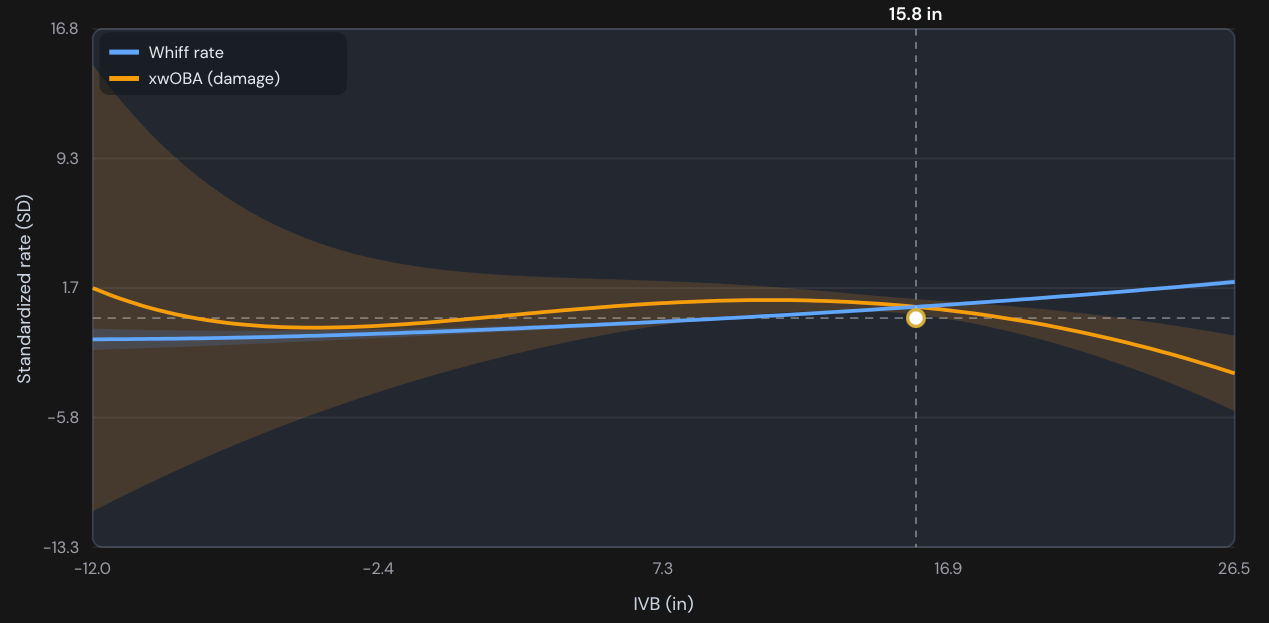
We see fastballs that have more than 15.8 inches of induced vertical break start to get more swings and misses while taking less damage. Is it this simple? Not quite.
There is nuance to all pitch data because it is relative to a pitcher’s arm angle. A pitcher with a 50-degree arm angle throwing a 15.8 IVB fastball is very different from a pitcher with a 20-degree arm angle throwing one.
Pitch shapes are all about hitter expectations. 15.8 vert from that pitcher with a 20-degree arm angle is going to have more ride than expected, whereas coming from a 50-degree arm angle would be far less than expected. There are examples like this littered throughout the pitch design process. This is very nuanced, and having a coach in your corner who is able to make these distinctions for you is incredibly valuable.
Take Freddy Peralta’s fastball, for example. The 16.7 inches of vert on his four-seam fastball is almost an inch more than our inflection point. Looked at strictly through the lens of induced movement, Peralta’s fastball seems only slightly better than average, yet in 2026 he threw it a whopping 53% of the time.
That’s because, from his 34-degree arm angle, it has far more ride than expected. Only Eury Pérez had more IVB on average from that arm angle this season on four-seamers. Check out our full breakdown of Peralta’s fastball here.
There is a third example of this sort of issue that is much harder to quantify and even more difficult to troubleshoot in season: deception.
Having good command and throwing really hard yet still getting hit is a really difficult thing to wrap your head around. You hear hitters talk about the idea of pitchers who hide the ball really well and others who feel like they can see it forever.
This is the idea of deception, which can play a role in a pitcher underperforming no matter how good the velocity, command, and stuff is. The conversation around deception is probably a more complex one for another time, but don’t undervalue its role in pitcher performance.
Significant Platoon Splits
It isn’t enough to just say that a pitcher is struggling when making player development decisions.
You need to identify the where, why, how and in this case the who. Many pitchers are more effective against one side of the plate than they are the other and this can really impact the quality of their overall performance.
Traditional baseball logic will tell you that a pitcher will have the advantage when facing a hitter of the same handedness. Drop-offs in performance against opposite-handed hitters are often par for the course. However, this doesn’t mean that you cannot work to improve that performance and even surpass what you can do against same-sided hitters.
Assuming performance is bad against a given batter handedness, the best place to start is to identify deficiencies in pitch usage.
In the case of opposite-handed hitters, big lateral breaking balls and sinkers tend to perform poorly relative to other pitch types. If a pitcher is having success with these pitches, then you can allow them to continue to do so, but be aware of the long-term concerns.
If they are struggling, then it may be time to adjust pitch usages. Four-seam fastballs and cutters perform better than sinkers on average against opposite-handed hitters.
Curveballs and gyro sliders perform better than sweepers. If you have one of these alternative options available in your arsenal, the first step should be to subtract the usage on the pitches that are struggling and reallocate them toward one of these other pitches.
Context matters here as well. How specifically are you struggling? If you are having a hard time getting in the zone, maybe a cutter or gyro slider that doesn’t have a lot of induced movement can help to solve that problem.
Not getting enough swing and miss? Introducing more four-seam fastballs, changeups and splitters should help with that.
Underperforming against same-sided hitters is a more difficult conversation to have because most pitch types can be successful. When looking at potential usage concerns, I’d lean towards overuse or predictability as the culprit.
From an arsenal standpoint, you might be dealing with some more fundamental issues rather than a need to add more pitches. Dead-zone fastball, verty changeup, and slow breaking balls are all examples of pitch flaws that come to mind that could be causing poor performance against the platoon you should be dominating.
Grandmaster vs Bulldozer: Pitching to Your Archetype
This is a conversation I’ve been having with a lot of coaches and players lately, and it is centered around pitcher identity and style of attack.
Somewhere on the spectrum from bulldozer to chess grandmaster exists every pitcher.
Elite pitchers have the ability to move themselves along that spectrum as needed to find ways to get outs but each of them has a place where they are most comfortable.
Having an arsenal and a game plan that plays into this style can be a game changer. If you are struggling during the season, it is worth challenging whether or not you are leaning into that identity enough. Let’s look at some examples throughout the big leagues.
To understand this concept, I find it best to look through the lens of three outcomes: swings and misses, called strikes, and weak contact. Your big bad bulldozer archetype is going to be the guy who leans heavily on swing and miss. Most commonly seen in relievers, these pitchers often throw very hard, have an absolutely lethal offspeed pitch or some combination of both.
Take Jhoan Duran, for example. Duran was in the 99th percentile in swing-and-miss in 2026, but was in the 5th percentile in called strikes and the 14th percentile in weak contact.
75% of his usage is made up of his splitter and his fastball, with his splitter being thrown nearly 50% of the time. He challenged hitters with his best stuff and ran them over to the tune of a 1.82 ERA in 59.1 innings pitched in 2026.
Duran throws a sweeper, curveball, and changeup on top of these two pitches as well.
Imagine if Duran decided he was going to try and increase the usage of these other pitches, for the sake of parity within his arsenal, trying to generate more weak contact and called strikes.
That would fundamentally change his style as a pitcher and likely steer him away from his most direct path to success.
Look for the pitchers who are a great fit for this archetype and aren’t currently using it. The same goes for the ones who are using it but not having the same success. You will likely find a similar phenomenon, which is the overemphasis of pitching to spots.
Jacob Misiorowski made some headlines with advice he gave to a Little League pitcher this year: “Throw it middle and pray.” Now, not all of us throw 104 and can live and die by this mindset, but what he is describing is a piece of the bulldozer mentality.
If you are a guy who throws very hard, has an outlier fastball profile, or has a very nasty off-speed pitch, the most direct path to success is to challenge hitters by attacking the zone.
If you are a guy who throws very hard, has an outlier fastball profile, or has a very nasty off-speed pitch, the most direct path to success is to challenge hitters by attacking the zone. This is the embodiment of the bulldozer mentality.
What about the chess grandmaster?
Even pitchers with nasty stuff can fall into this category. But these are the pitchers who rely on an assortment of different pitch types, sequences and locations to affect hitters’ timing and swing quality. There is no better example of this in baseball than Yoshinobu Yamamoto.
Yamamoto ranked in the 56th percentile of swings and misses, the 62nd in called strikes and the 63rd in weak contact.
He can get outs in a wide variety of ways. He throws six different pitches with five of the six being used 13% of the time or more. Each pitch has its own place in the arsenal, with varied usages between left- and right-handed hitters. He struck out just under a batter per inning this year but was one of the best pitchers in the league, posting a 2.53 ERA. His stuff is absolutely nasty, but the style in which he deploys it is very tactical.
Could he pitch like a bulldozer? Perhaps, but that is not the identity he has built for himself.
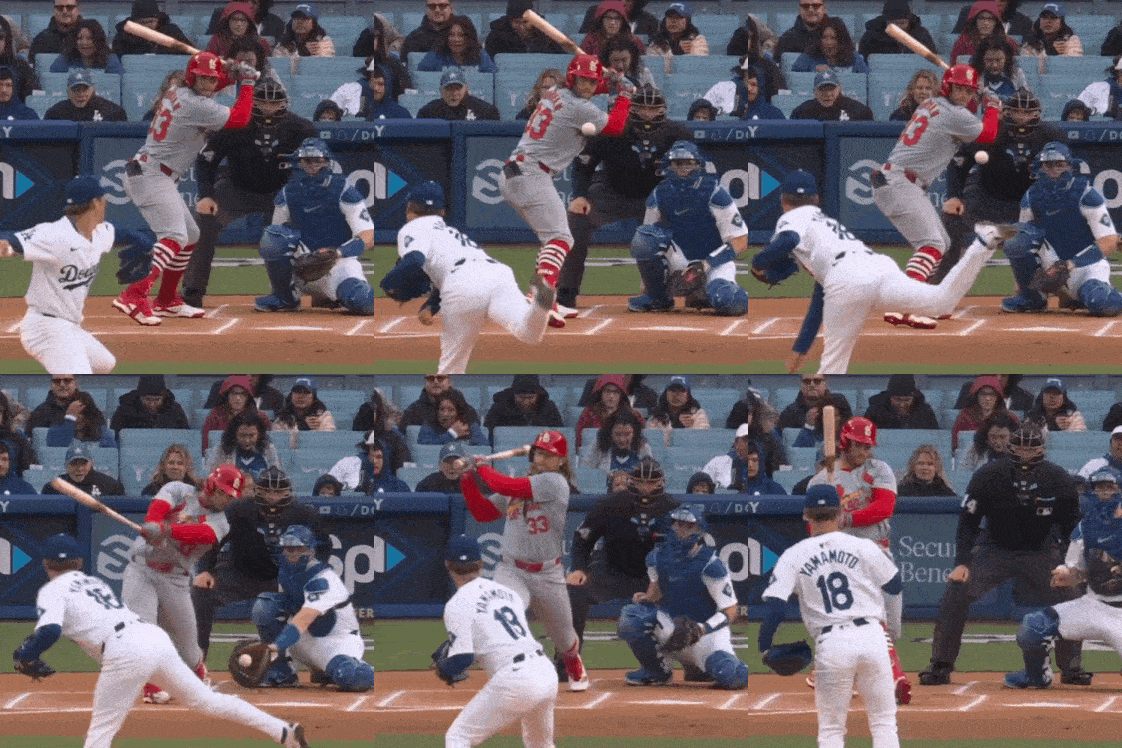
When trying to identify pitchers who might be a great fit to lean more heavily into this style, consider what they are doing now. Would they be more successful throwing fewer fastballs and mixing in more offspeed pitches? What about pitching backwards?
Are they able to grab a strikeout when they need to but also know how to roll up a double-play ball when the situation calls for it?
Lean into the strategic nature of this archetype and watch the outs pile up. Overuse one pitch type and try to strike everyone out and be prepared for underperformance.
I mentioned that this exists on a spectrum, so let’s identify what a pitcher who sits in the middle ground looks like.
Cristopher Sanchez is the embodiment of this style of pitcher.
Sanchez was 50th percentile in called strikes and 65th percentile in weak contact, showing his ability to attack hitters through multiple avenues. What Sanchez also does is generate swings and misses in the 95th percentile.
A chess grandmaster when the situation calls for it and a bulldozer when he needs to be.
Sanchez has some really interesting splits that reveal where his archetype leans one way versus the other. Against left-handed hitters this season, Sanchez had a K/9 of 11.24 and a BB/9 of 0.67. He absolutely steamrolls left-handed hitters.
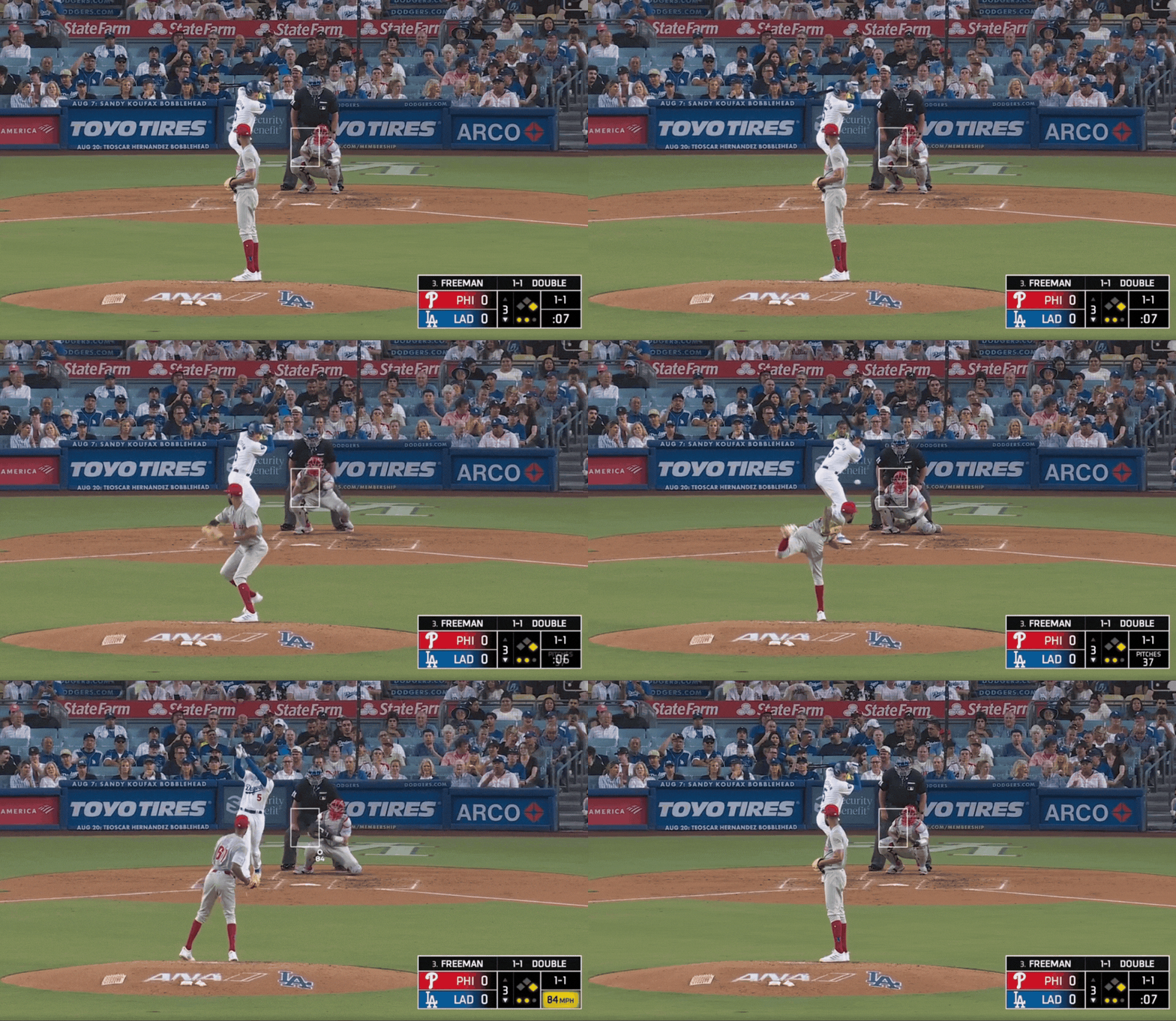
Against righties, it is a different story.
His K/9 dropped to 9.63 and his BB/9 jumped to 2.41. When facing lefties, Sanchez throws nearly 60% sinkers but against righties, that usage drops by 18%. His changeup usage against righties is more than three times what it is against lefties.
Why? Because his 18% whiff rate on his sinker versus lefties drops all the way down to 9% against righties, making it far more difficult for him to bulldoze through those hitters.
Sanchez’s versatility and dominance are a lethal combo that sets him in the middle ground of the archetype conversation. Unfortunately, not everyone has the stuff and skill set to be this guy.
Mental Struggles
No, I am not saying that any mental struggles a pitcher is having on the mound can be improved through pitch design. But when a pitcher is struggling with the mental side, especially during the season, sometimes change can be a good thing.
Empowering a pitcher with something new that feels distant from what their struggles are like, whether that be a new pitch or a new game plan, can be a very powerful way to pull a pitcher out of a rut.
Towards the end of my college career, I wasn’t pitching very much.
I felt very lost in my own identity as a pitcher, trying to be someone I was not. I was really struggling with my command, something I had never really struggled with during my career.
In an effort to get some meaningful innings, and just feel something different, I dropped my arm slot from sidearm closer to submarine.
I felt different almost instantly.
My command improved drastically and suddenly I was getting outs in intersquads and felt like my coaches were looking at me as a potential option for the first time all season. I ended up getting a chance to get an out in a right-on-right matchup in the Big East Championship game for us, which was my last career outing.
Do you need to try and completely reinvent who you are as a pitcher? Most of the time I would advise against that. But there is power in doing something new and different, and adding a pitch or flipping your pitch usage is a low-cost means for doing that.
There are a lot of great cases for using pitch design or changing a pitcher’s usage strategy to improve in-game performance.
However, I also want to provide cautionary scenarios for when this may not answer a performance issue or, at the very least, should not be priority number one.
When to NOT use pitch design:
Early Offseason/Mechanically Focused Training Phase
In many ways, a pitcher’s arsenal is at the behest of their delivery.
I mentioned earlier that arm angle dictates a lot about the shapes a pitcher can create, and their pronation and supination bias helps to dictate what pitches they should/can throw.
Arm angle can change through a variety of mechanical changes, and while a pitcher’s ability to pronate and supinate won’t necessarily change through mechanical adjustments, their expression of that bias absolutely can.
So I often caution against adjusting grips and trying to dial in consistent shapes when the delivery is in the process of being improved.
I often caution against adjusting grips and trying to dial in consistent shapes when the delivery is in the process of being improved.
The pitches you just spent 4 weeks getting to be consistent are now subject to change as a result of a more efficient delivery or a different arm angle. A better delivery might also help to solve certain problems that you identified with the arsenal. For example, a pitcher who is experiencing a forearm flyout as a result of bad sequencing may be expressing supinator tendencies.
Improved energy transfer could result in a 10% jump in spin efficiency on their four-seam fastball and a better profile as a product.
That comes without having to do a single piece of conventional pitch design.
Once the cement is dry on the mechanical adjustments you are trying to make, then you are in a better place to get the most out of your pitch design sessions and have a clear picture of what a pitcher can and should be throwing.
Now, this doesn’t mean you can’t do any pitch design style work during the stretch of time where you are working on the delivery. Oftentimes, you might see an athlete look closer to what the intended future delivery is out of a drill or constraint.
Trying to get a pitcher to be more linear and delay upper-half extension and rotation? They might look awesome out of a roll-in.
I encourage coaches to have their athletes do pitch design style work in catch play or on the mound while in the constraint where they look the best.
This will help to close the gap on the learning curve when you do finally get to true pitch design sessions.
There is a lot of great feedback you can get from the athlete in this setting. Grip comfort, repeatability, and understanding of what profile they are going for can be done in catch play with an iPhone set up as an Edgertronic camera. See Tread Coach Isaac Wiley’s Instagram post on how to set that up here.

This is a tool I use every single day to help accelerate the pitch design process and learn about a pitcher’s forearm rotation bias, finger dominance, and some of the weird grip intricacies that they might have.
With a constraint applied that pushes the pitcher towards the improved version of their throw, you can get real-time feedback on the likelihood of a given grip or cue succeeding in a mound setting.
There are limits to this.
Eventually, you have to get ready for the season whether the delivery is where you want it to be or not and at that time it is crucial to make sure the arsenal is ready to go. The goal is to give the athlete the longest, most clearly focused runway possible to achieve the best version of their throw.
Implementing pitch design too early in the offseason can potentially muddle that process.
Know Your Priorities
Regardless of time of year, pitch design might not be a priority for an athlete, especially as it relates to solving in-game performance issues.
I think this point applies best to youth, high school, and many college pitchers. While a pitcher’s arsenal is a meaningful component of having success on the mound, it is important to really evaluate what the lowest-hanging fruit for the athlete is before spending some of your training economy on something as specific and nuanced as pitch design.
I want to outline three scenarios where prioritizing pitch design will likely NOT solve an in-game performance issue.
1. Velocity Is the Lowest-Hanging Fruit
The reality of today’s game is that velocity is king.
If you are not throwing as hard as the counterparts that you are competing against, then that should be a major priority.
If your velocity is well below the average pitcher for your age and you are struggling with in-game performance, looking at pitch design for the answer is ignoring the elephant in the room.
Similarly, if you have specific aspirations of playing at the next level, whatever that may look like, then there are velocity thresholds that are generally required to get those opportunities.
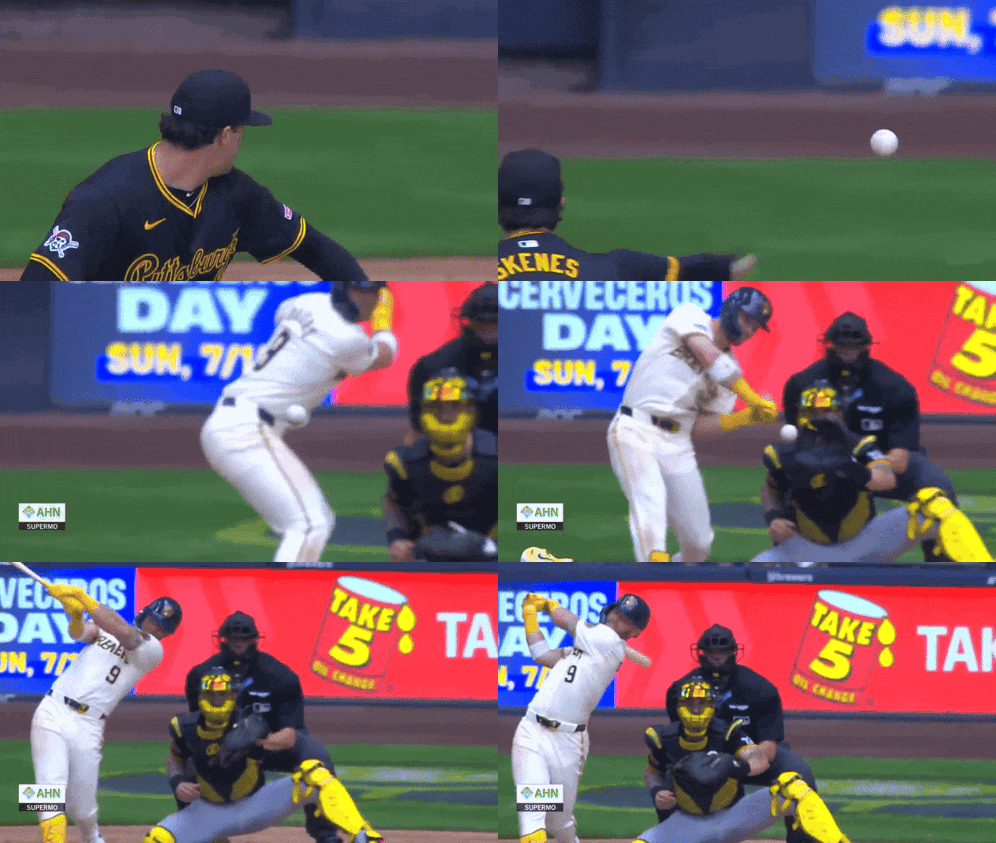
Does that mean you should just go rip pulldowns all the time?
No, of course not.
There are so many opportunities that you can attack to gain velocity that don’t involve aggressive stimulus.
Get stronger, get faster, gain weight, improve your delivery.
If you are a youth athlete and you are behind the eight ball on velocity, don’t panic. But as you get into your later high school years and college seasons, velocity has to be a priority of your training in whatever form that takes. You might need to spend more time in the kitchen than you do in front of a TrackMan.
2. When Command Is the Real Problem
There is a difference between needing to be in-zone more and having objectively bad command.
Needing to be in-zone “more” implies that you are already in-zone some! Adding a cutter can help solve that problem. That being said, if you have a really difficult time making competitive pitches, pitch design is probably not your answer.
There are many other avenues that can help you improve your command.
Increasing mechanical efficiency, identifying the range of motion limitations that amplify this problem, and dialing in your mental game are all more targeted ways to improve a pitcher’s ability to command the baseball.
There are also more direct approaches like variable command training where you can use different ball weights and sizes, or throwing distances to enhance a pitcher’s proprioception, motor control, and release point consistency.
All of this is going to be more applicable to solving this specific in-game performance problem than targeting pitch design.
3. Performance Anxiety/Lacking Mental Skillset
In the “When to use pitch design” portion of this piece, I outlined the ways in which pitch design can help a player who is struggling with the mental game. I think that solution is more of a band-aid on a bullet hole and applies best for in-season struggles.
When you have a full offseason, there is more incentive to attack the mental game at its core. Training the mental side of pitching is a very underrated way to improve in-game performance and while you can absolutely implement pitch design while improving your mental skillset, it shouldn’t be the primary driver of the improvement. (Editor’s note: check out our Mental Skills Course here).
Final Thoughts
Pitch design is one of the most powerful tools in player development, but it is just that: a tool. It shines in-season, when velocity and command are already in place and can be a game changer when platoon splits or predictability are costing you. It is far less effective when the delivery is still changing or when velocity, command, or the mental game is the real limiting factor.
Before you change a grip or add a pitch, identify the root cause of the performance problem, and attack the lowest-hanging fruit first if you can.
Once you do that, pitch design can be a precision weapon to make you the best version of yourself.
So the next time you hear a story about the Brewers, Rays or Guardians weaponizing their newest acquisition with a new pitch or game plan, ask yourself what would happen to your in-game performance if the same pitch were added to your arsenal?
Want a Plan Built for You?
If you’re struggling with your mechanics and want a second set of eyes, we’d love to help. Every Tread athlete gets a full assessment and an individualized throwing plan built around their body, their arsenal, and their goals.
Apply to train with Tread and we’ll see if it’s a good fit.